
The best tour of Washington doesn't come with a guide or a ticket. It just needs a pair of shoes and a willingness to get a little lost.
At 6 a.m. on the steps of the Lincoln Memorial, the Reflecting Pool is still and gray, and the tour buses haven't shown up yet. On a Wednesday, you won't be alone. Since 2013, the free fitness group November Project has turned those marble steps into a weekly stair workout, and hundreds of people have been known to show up before sunrise to run them over and over. Across the water, the Washington Monument catches the first light before anything else in the city.
Running turns the District, Maryland, and Northern Virginia, the area locals call the DMV, into something you live in rather than pass through. You learn the hills, the shortcuts, and the water fountains. You find out which neighborhoods smell like bread at dawn and which bridges catch the wind.
Here's how to use your runs to really get to know the region.
Pick Routes That Connect, Not Loops That Circle
The National Mall is a fine place to log miles. It is also where every visitor ends up. To see how Washington actually fits together, plan routes that carry you from one neighborhood to the next.
The region's trail network makes that easy. The Capital Crescent Trail runs about seven miles from Georgetown to Bethesda along the bed of an old B&O Railroad spur, past the Potomac and under the tree cover of upper Northwest. An extension to Silver Spring is being built alongside the Purple Line. The Mount Vernon Trail covers 18.5 miles of the Virginia shoreline, from Theodore Roosevelt Island through Old Town Alexandria to George Washington's estate, and in February the Public Lands Alliance named it the country's first Trail of the Year.
On the east side of the city, the Anacostia Riverwalk Trail strings together roughly 16 miles of paved path on both banks of the river. It passes the Navy Yard boardwalk, Nationals Park, Anacostia Park, and the spur trails onto Kingman and Heritage Islands, and it keeps going north into Maryland toward Bladensburg. Plenty of longtime residents have never set foot on it. The Metropolitan Branch Trail heads north from Union Station through NoMa and Brookland, and out in Virginia, the Washington and Old Dominion Trail, which locals call the W&OD, stretches 45 miles on an old railroad bed from Shirlington to Purcellville.
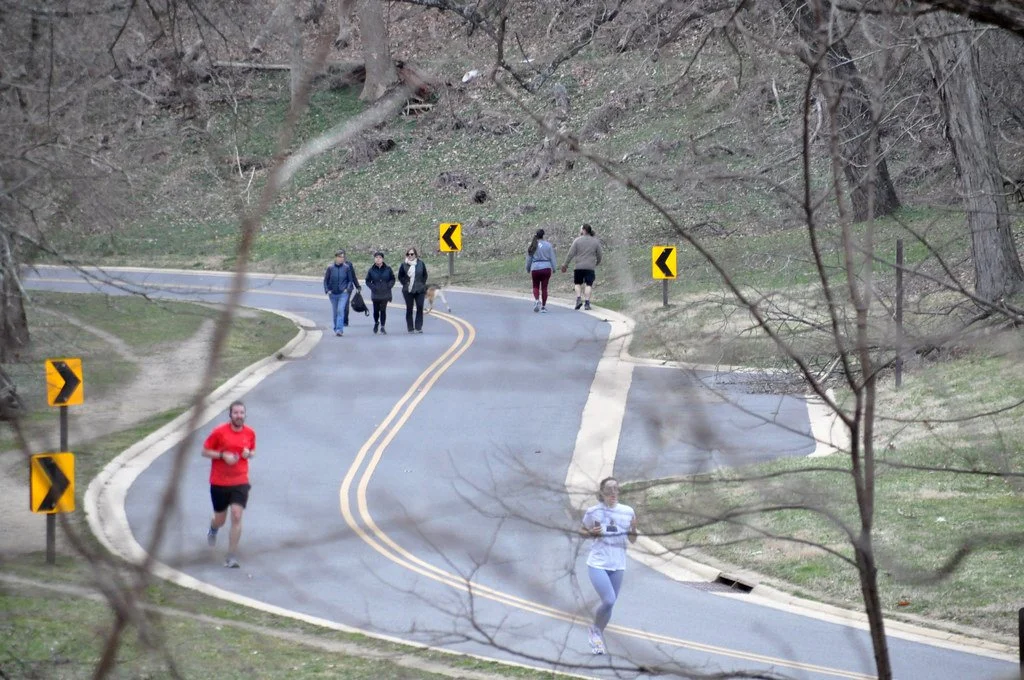
Rock Creek Park
In 2022, the National Park Service closed about five miles of upper Beach Drive in Rock Creek Park to cars year-round, which gave runners a paved road through the woods in the middle of the city. Start near the Maryland line and follow the creek south, and you'll come out in Georgetown with a much better sense of how the city's neighborhoods sit on its ridges.
Run any of these point to point, then take Metro or grab a Capital Bikeshare bike home. You'll understand the map better after one morning than after a year of driving.
For more options, our DMV Route Picker has 24 routes across D.C., Maryland, and Virginia, sorted by workout type, from easy runs and long runs to hills, tempo, and trail. Each route lists distance, terrain, elevation, parking, restrooms, water, and the nearest Metro stop.
Let a Race Show You Around
Race directors spend months figuring out how to fit as much of a city as possible into a single course. You might as well enjoy their work.
The Marine Corps Marathon, known as "The People's Marathon," ran its 51st edition on Oct. 25. It is the largest marathon in the world that doesn't award prize money, and the course reads like a tour itinerary. It starts near the Pentagon, crosses into the District through Georgetown, runs the length of the National Mall, comes back over the 14th Street Bridge through Crystal City, and finishes with an uphill push to the Marine Corps War Memorial. If you want a guaranteed spot for next year, finishing the Marine Corps 17.75K in March will get you one.
The Credit Union Cherry Blossom Ten Mile, which has billed itself as "The Runner's Rite of Spring" since 1973, starts and finishes on the Washington Monument Grounds and loops past the Tidal Basin and the memorials. Entry is by lottery, and next year's race is set for April 4, 2027. The Army Ten-Miler starts and finishes at the Pentagon each October, and the Parks Half Marathon follows Montgomery County's Rock Creek Trail.
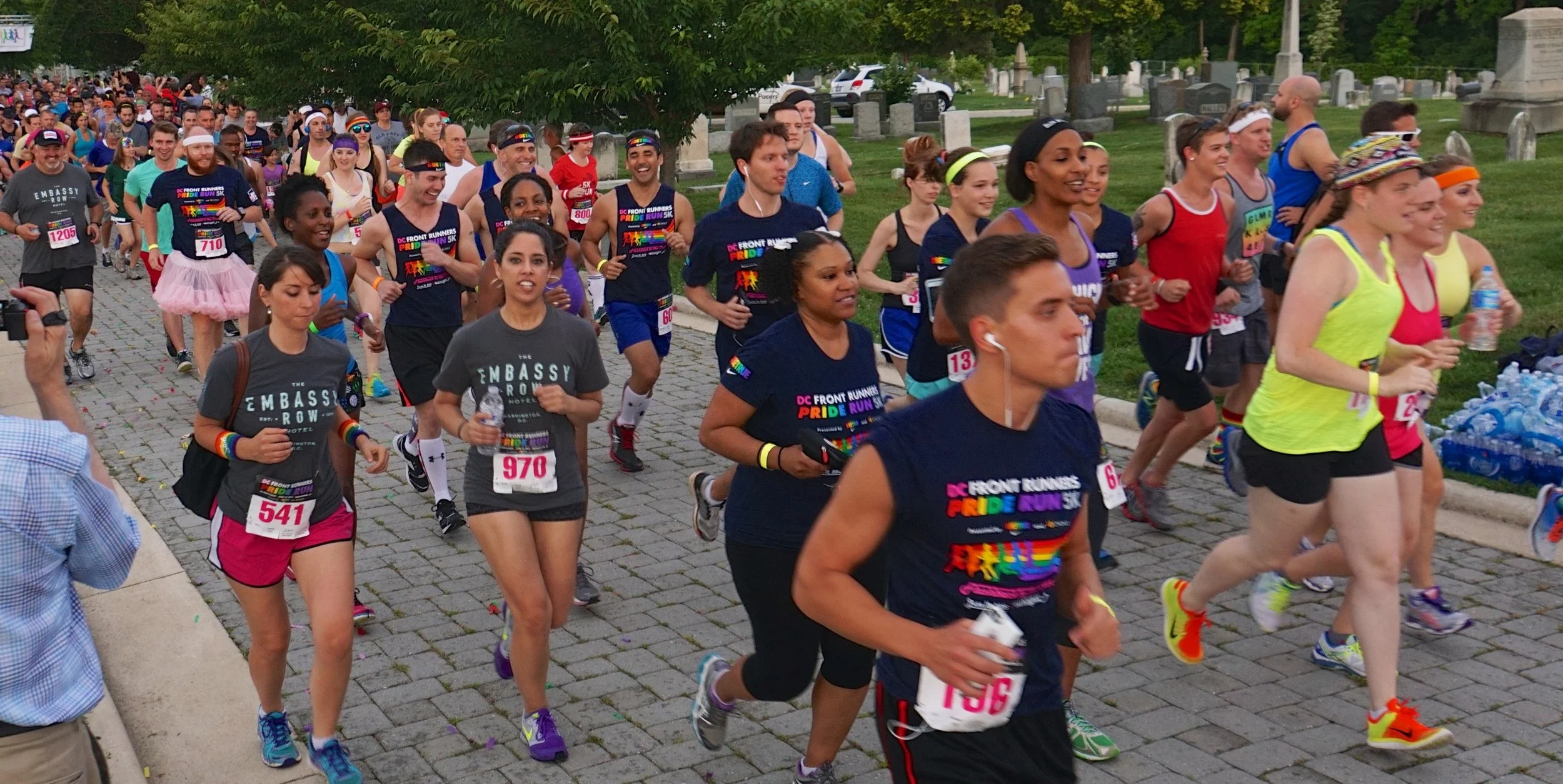
DC Front Runners Pride Run at Congressional Cemetery
Some of the best races in the region happen in places most visitors never see. Historic Congressional Cemetery, a 35-acre burial ground on Capitol Hill founded in 1807, hosts two of them. Dead Man's Run, the cemetery's annual fall fundraiser, starts among the headstones each October, heads out onto the Anacostia Riverwalk Trail for a quick out-and-back, and finishes back inside the gates on a flat, USATF-certified 5K course. Every June, the DC Front Runners Pride Run 5K kicks off Pride Month from the same spot, running along the Anacostia and past the fields at the RFK campus. Last year's race had nearly 1,200 finishers.
A few miles north, the Friends of the National Arboretum puts on a Flowering 5K in March and a Fall 5K in the autumn. Both wind through the U.S. National Arboretum, a 451-acre research garden in Northeast run by the U.S. Department of Agriculture, and leashed dogs are welcome on the course. Most Washingtonians think of the Arboretum as a place for a slow Sunday walk. Racing through it is a faster way to find out how much ground it covers.
Smaller races are often better for exploring. A neighborhood 5K in Brookland or Del Ray will show you streets you'd never otherwise have a reason to see. The Capital Runner race calendar lists events across the region every week, so look for one in a ZIP code you don't know.
Plan for the Terrain
Washington has more hills than most visitors expect.
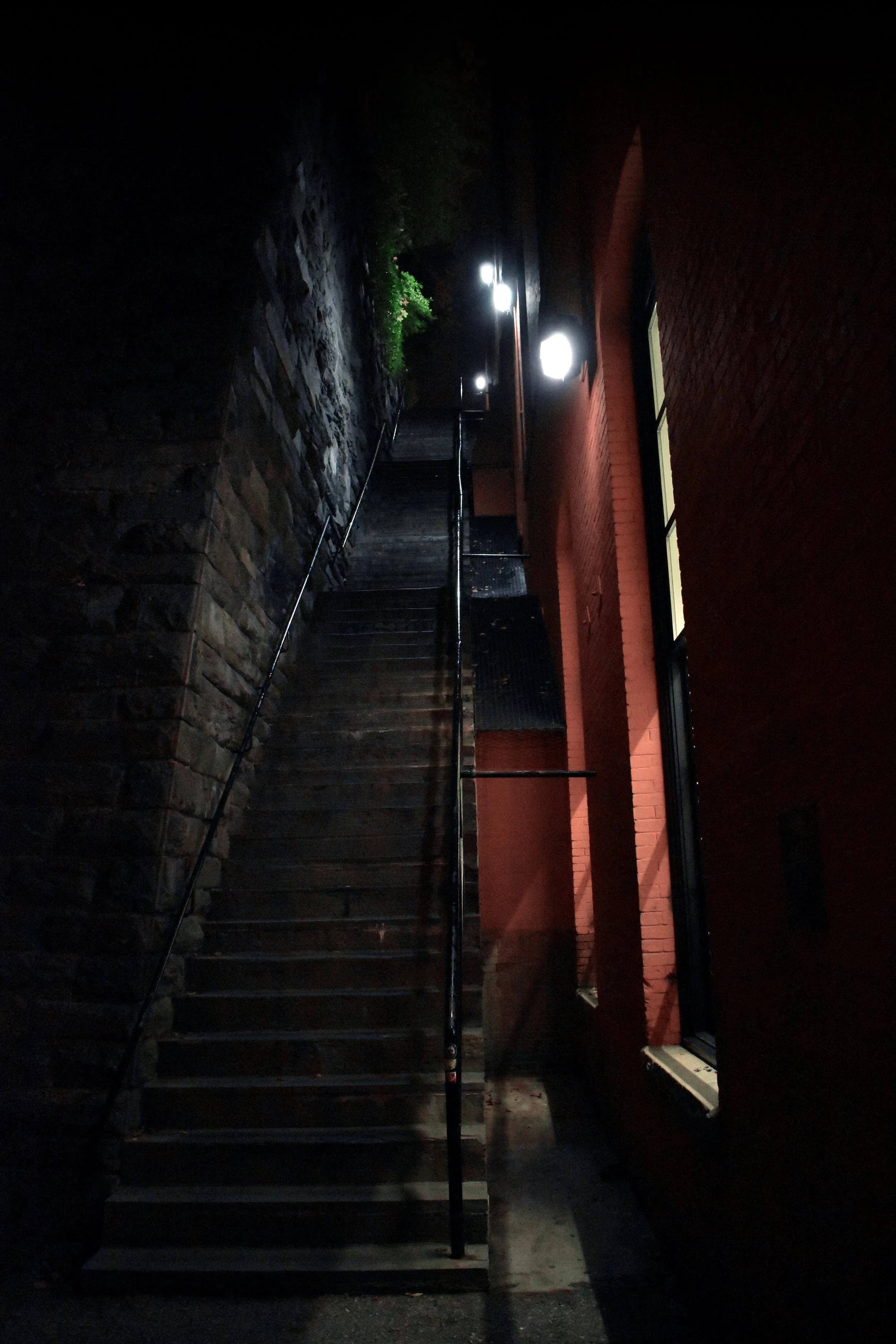
The Exorcist Steps by Carl Glover
Rock Creek cuts a deep valley through the middle of Northwest, which means every route out of the park ends in a climb, whether you're heading up to Adams Morgan, Mount Pleasant, or Cleveland Park. In Georgetown, the 75 stone steps that run from Prospect Street down to M Street were built in 1895 and became famous in 1973 as the "Exorcist" steps. Runners still use them for repeats, and they are as steep as they look. Meridian Hill Park, which many residents call Malcolm X Park, sits on a hillside with terraced stairs on both sides of a 13-basin cascading fountain, often called the longest in North America. A few laps of those steps will do more for your hill strength than a month on a treadmill.
For flat miles, the roughly four-mile loop around East Potomac Park and Hains Point (while it is still open) hugs the water the whole way, and a lot of local runners do tempo work there. The wind comes off the Potomac with nothing to stop it, especially in winter. Check the tides, too, because the path floods at high water.
For softer footing, the C&O Canal towpath starts in Georgetown and gives you packed dirt and gravel along the river, a welcome break from pavement on a long run. The Mount Vernon Trail got smoother recently as well. Volunteers removed more than 1,000 trail bumps and installed six freeze-resistant water fountains with bottle fillers, which matters more than it sounds when you're halfway to Mount Vernon in August.
In the summer months, the humidity off the Potomac can make an easy eight miles feel like a long run, so go early, carry water, and learn where the fountains are. In winter, the bridges are colder than the streets on either side, so dress for them.
Bring People With You
The quickest way to learn a neighborhood is to run it with someone who already lives there, and the DMV has a run club for almost every pace, schedule, and personality. Our DMV Run Club Directory lists clubs across the region, and these are a few good places to start.
DC Road Runners, founded in 1961, is the old guard. Its Monday Chill Run leaves from Duke's Grocery in Foggy Bottom, and its Saturday long run starts at North Meade Street Park in Rosslyn, with paces that range from under seven minutes a mile to over 13. Every Person Run Club is free, with no memberships and no dues. It meets Wednesday evenings at Tap99 in Navy Yard for an easy three-mile loop and Sunday mornings on Capitol Hill for longer runs, and its members stay at the finish to cheer until the last runner comes in.
DC Front Runners has served the city's LGBTQ+ runners and their friends since 1981, with group runs on Tuesday and Thursday evenings and Saturday mornings. NoMa Run Club hosts four runs a week from REI and Lost Generation Brewing on the Metropolitan Branch Trail, and its post-run social scene has a reputation of its own. Groups like Rock Creek Run Club and DC Rock Creek Rockets can take you through some of the best routes and trails in the park.
Show up, introduce yourself, and follow along. Someone will point out the best bagel shop on the route, the shortcut through a park you didn't know existed, and the hill everyone hates. Schedules shift with the seasons, so check each club's social pages before you go, or browse our DMV Run Club Directory to find one near you.
Finish Somewhere Worth Staying
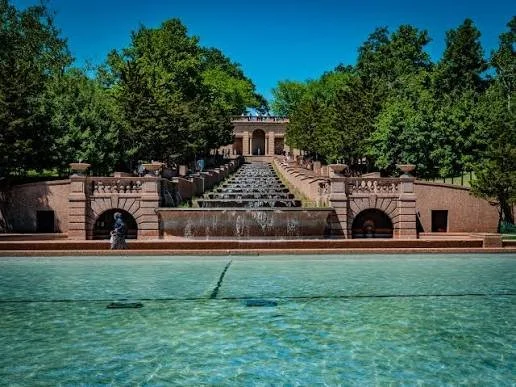
Meridian Hill Park
How a run ends matters as much as how it starts, so plan your route to finish where you'd want to spend the rest of the morning anyway.
Finish at Meridian Hill Park on a Sunday afternoon, and you'll hear the drum circle before you see it. Drummers have gathered there for decades, and the fountain is running again after years of repairs.
End on Capitol Hill and grab brunch in Eastern Market or at The Roost. Run the Capital Crescent Trail south and finish on the Georgetown waterfront, or take the Mount Vernon Trail all the way to Old Town and cool down at the foot of King Street. Finish at the Wharf, sit on a bench, and watch the boats. Your legs will be sore, and that's fine. You'll remember the place better because of it.
The landmarks are what bring people to Washington. The runs are what make them stay, and if you haven't run a corner of the DMV yet, you haven't really seen it.