
Maryland-based Swift Running Wants Carbon-Plated Shoes for Every Runner
Carbon-plated running shoes have become ubiquitous across the running industry. Once a flashy racing option for pros and amateurs who want to race like the pros, you can now find the carbon insert in daily trainers and trail shoes, though at a steep cost. What’s more, the lifespan of these shoes is significantly less than a typical shoe, making it a costly proposition if you develop an addiction to the bouncy boost they deliver.
Enter Swift Running, a Maryland-based shoe company started by Pooja Bansal in 2024 with the goal of building a high-performance shoe using advanced technologies at a price where runners can take advantage of the technology for every run, from daily trainers to marathon racers. The company offers four different shoe lines for men and women. I picked up a pair of the EQUUS tempo trainers to review as part of this story (you can read more on that below), and there are two daily trainers and a recovery shoe.
The inspiration to create a running shoe company came from Bansal’s own experience as a runner. Like many, she took up running as an adult as a way to become healthier, challenge herself, and find some alone time amidst a full life of work and parenting. As part of that journey, she says, she trialed shoe after shoe in pursuit of the right pair.
“At one point, I was dealing with persistent knee pain, and changing to a better pair of running shoes made an immediate difference. That experience opened my eyes, but it also came with another surprise—the price. As my mileage increased, I needed to replace my shoes more often and needed to add additional pairs in my rotation. I started questioning why good performance footwear had become such an expensive part of a sport which is meant to be free.”
While the company stresses affordability (the shoes range from $110-$140), the goal is not to compromise in quality. Runners will find that the shoes are highly responsive and feel substantial. Leaning on her experience as an RRCA-certified coach, Bansal spent years researching, testing, and developing the shoes.
“Every material we use, from the upper mesh all the way down to the outsole, is picked intentionally. We look at how breathable and durable the upper needs to be, how the midsole responds over miles, how the plate works with that foam, and how the outsole can provide both grip and durability.”
According to Bansal, the work has paid off. While the company doesn’t have the reach of Nike or Hoka, Bansal is shipping shoes around the world, and runners in Prince George’s County can try on a pair at Haraka Run and Walk. But for Bansal, the growth of Swift Running is not just about the bottom line and getting their shoes into brick-and-mortar stores. It is about developing a shoe that runners reach for.
“I want a runner to walk into a running store, see Swift sitting next to Nike, Hoka, Brooks or another brand they have known for years, and genuinely consider Swift as one of their choices. Not because we are the ‘local small brand’ they want to support, but because they know the product and trust what we have built.”
Knowing they cannot compete with the big brands, the team set out to get their shoes on runners’ feet. The biggest challenge, Bansal said, is earning that trust.
“You can make a really good shoe, but runners have spent years, sometimes decades, trusting the brands they already know. And shoes are very personal. You are basically asking someone to try a brand they may have never heard of and trust it with their body for hundreds of training miles or even on marathon day. That is a big ask.”
Swift Running has gone on the road. The company sets up booths at race expos, run clubs, schools, and track meets, demoing their shoes to runners who have never heard the name before. The company even has a stable of runners racing in their shoes.
“One of the moments that meant a lot to us happened at this year's Boston Marathon,” Bansal told me. “One of our athletes ran Boston in our carbon-plated shoes and finished under three hours. That was an emotional moment. Boston is not just another race, and knowing that someone trusted our shoe for 26.2 miles there and ran a sub-three marathon in it meant a lot to us.”
Building off the momentum, Swift is preparing to introduce a brand new long-distance racer this fall.
“For us, launching it around the Marine Corps Marathon weekend feels very special. We’re a Maryland company, and the DMV running community has been such an important part of how Swift has grown, so we wanted the first big moment for this shoe to happen here. Keep an eye out for a few pairs of Swift shoes moving pretty quickly through the streets of D.C. this October.”
The Capital Runner Review: EQUUS Tempo Trainer
Disclaimer: I purchased these shoes to test in advance of this article. I am not a professional shoe reviewer, I am just some guy. Do with that what you will.
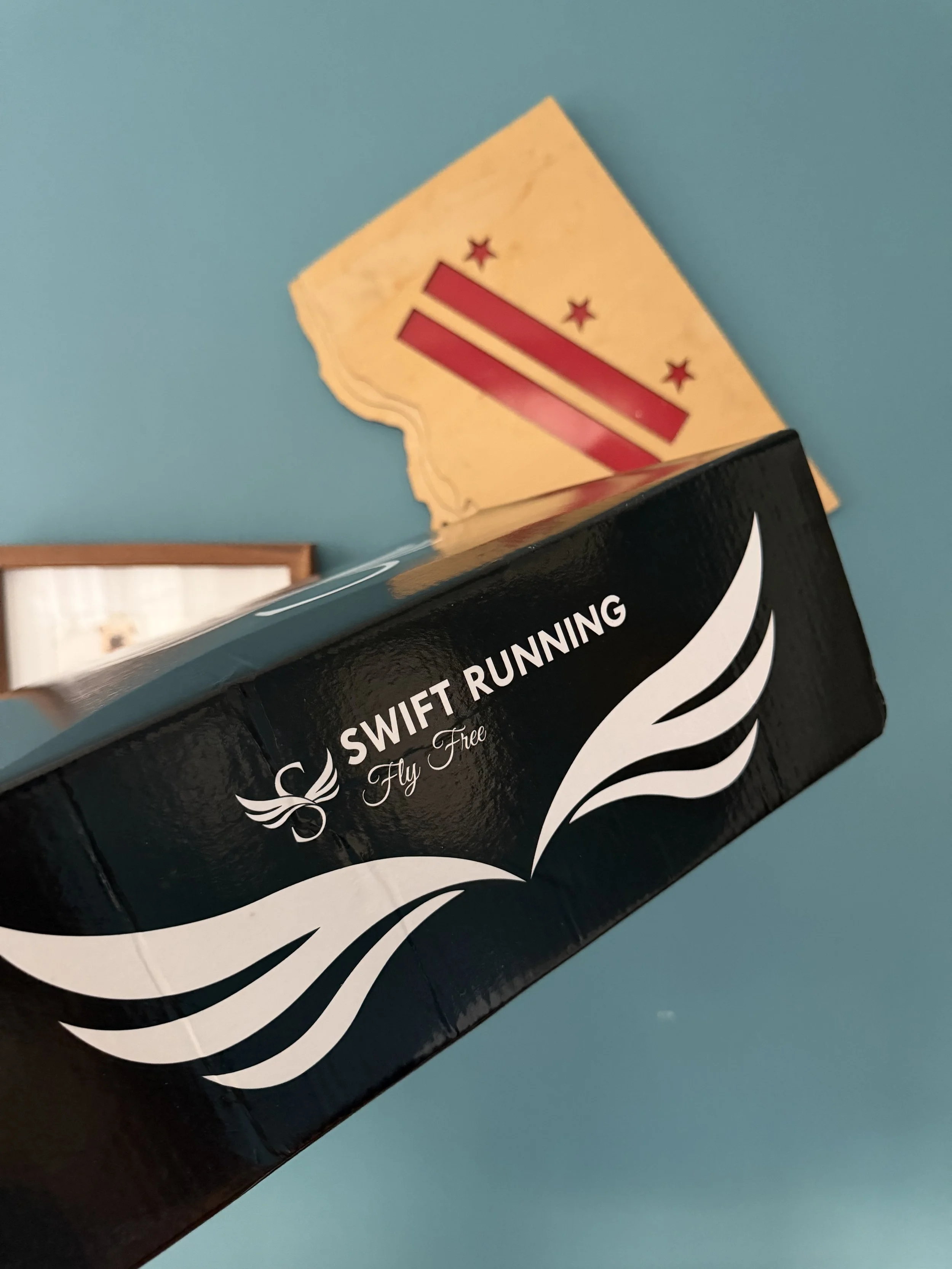
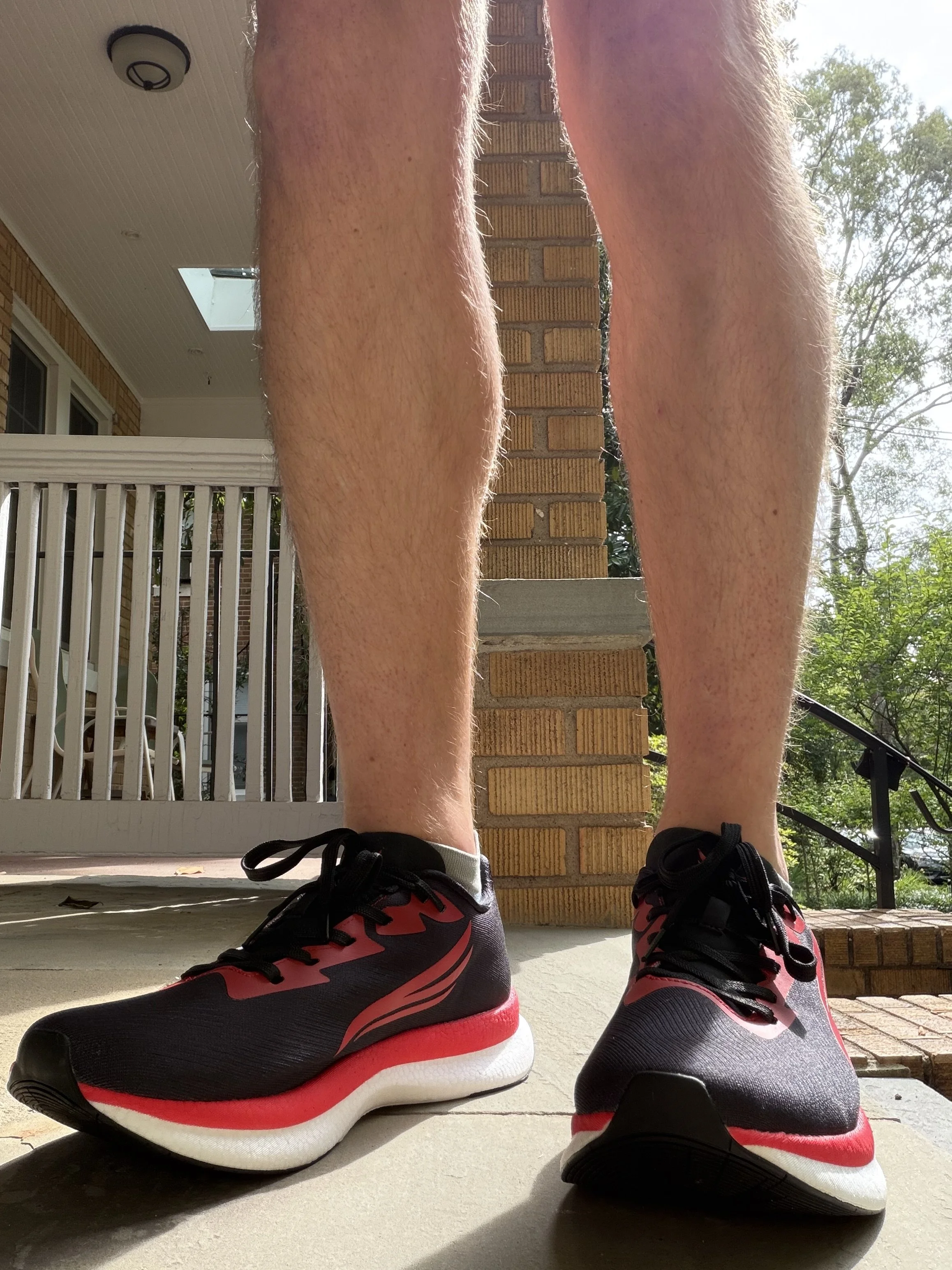
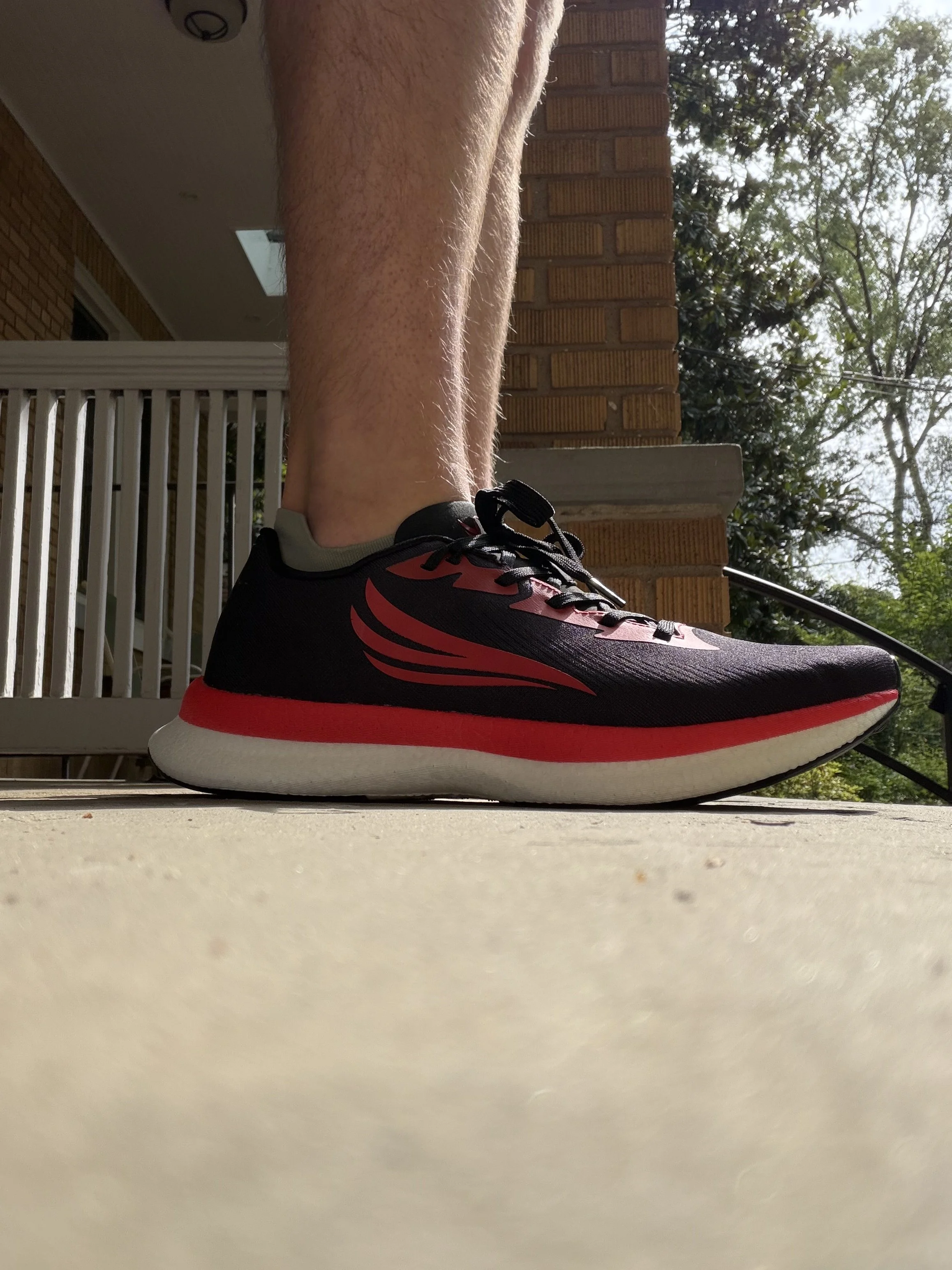
Shortly after I connected with Pooja to talk about Swift Running for the blog and newsletter, I thought it would be a great time to try out a pair of their shoes. It has been a number of years since I last wore a pair of carbon-plated shoes. It was memorable insomuch that I blew up halfway through a marathon and I took a few months off running to lick (and bandage) my wounds. The pair still sits on a shelf in my closet, taunting me.
I am the exact kind of runner Pooja pointed out during our interview. I have primarily run in the same two lines of Hokas since I turned 30. Why change things up when I can buy multiple pairs of the same shoes that serve me well and wear them for years?
The EQUUS is the lightest shoe offered by Swift. On the advice of reviewers, I sized up from my usual 11.5 to a 12 to account for the narrow profile. This gave me enough room to feel snug without being too tight, though I do slap the pavement a bit more with the extra length.
It clocked in at just over 7 ounces, with a carbon midfoot plate and a 40-millimeter heel stack. Over the past few weeks, I put around 50 miles on the shoe. They were responsive without feeling unstable, and it gives a nice return without the extra effort. And while I am no expert in shoe anatomy, they still feel and look as fresh as they did 50 miles ago.
To be honest, I was worried after my initial run that these shoes would not be for me. I came in from a six-mile run with a blister on my heel. But after dialing in the laces and testing a few different weights of socks, I never experienced that issue again.
I have not yet tested them in wet conditions. Like a lot of racing shoes, and carbon-plated shoes in particular, the EQUUS has a thin outsole with little tread. This is great for most of my runs and certainly cuts down on weight, but I worry it may be a bit slick when wet.
For the price, this shoe really shines. It feels nice underfoot and the upper is breathable. If you have wide feet, this may not be the shoe for you, but for the vast majority of runners who want to try out a carbon-plated shoe, this is certainly one to try.
Buy the EQUUS here. And check out the rest of the lineup here.